
Art in Hobart
Stay in a waterfront hotel in Hobart full of wonderful artwork.
Tasmania is Australia’s smallest state and this holiday really does show off the best of this beautiful island. The charming city of Hobart, uninhabited and pristine islands, sweeping sandy bays, towering mountains, unique wildlife and gourmet food.

Stay in a waterfront hotel in Hobart full of wonderful artwork.
 2
2
Embark on a memorable four day walk amidst the untouched scenery of Maria Island.

Go Kayaking on the Freycinet Peninsula spotting flocks of pelicans as you paddle.

Search for the Tasmanian Devil and sample true bush tucker.


For this holiday we have chosen to include some truly fabulous experiences to ensure you get under the skin of Tasmania. This varied itinerary showcases the best of the island from the local produce to resident characters, both human, monotreme and marsupial, diverse landscapes from mountain to beach and the chance to explore by self-drive, on foot and by boat. It is an itinerary designed to make you fall in love with Tasmania.
Day 1
Hobart
Day 2 - 3
Hobart
Day 4
Hobart - Maria Island
Day 5 - 6
Maria Island
Day 7
Maria Island - Triabunna - Freycinet
Day 8 - 9
Freycinet
Day 10
Freycinet - Launceston
Day 11
Launceston
Day 12
Launceston - Cradle Mountain
Day 13
Cradle Mountain - Launceston
Day 1
Hobart

Stay in a waterfront hotel in Hobart full of wonderful artwork.
Day 2 - 3
Hobart
Day 4
Hobart - Maria Island
Day 5 - 6
Maria Island
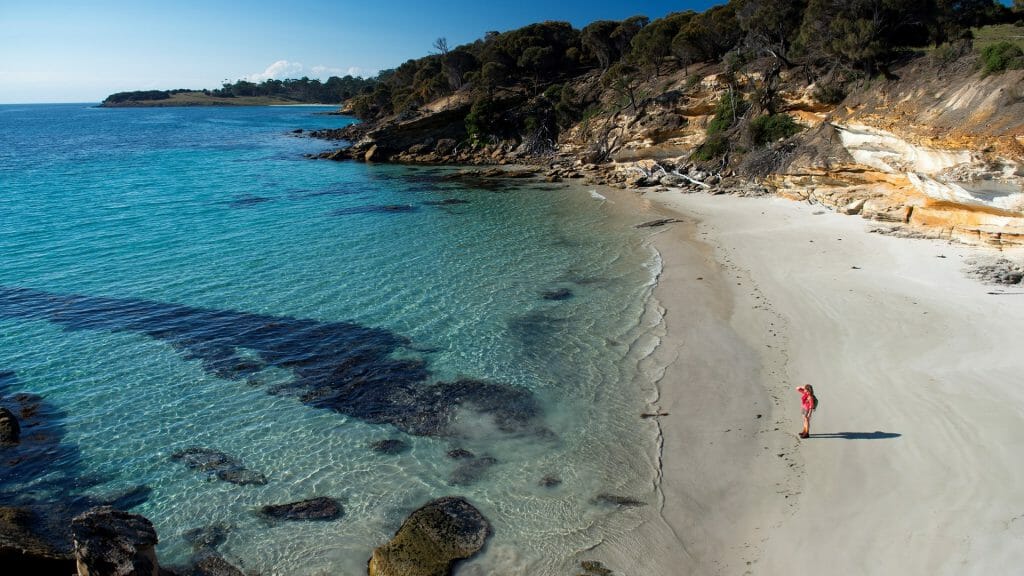
Embark on a memorable four day walk amidst the untouched scenery of Maria Island.
Day 7
Maria Island - Triabunna - Freycinet
Day 8 - 9
Freycinet

Go Kayaking on the Freycinet Peninsula spotting flocks of pelicans as you paddle.
Day 10
Freycinet - Launceston
Day 11
Launceston

Search for the Tasmanian Devil and sample true bush tucker.
Day 12
Launceston - Cradle Mountain

Trek through ancient rainforests, around glacial lakes beneath the towering spires of Cradle Mountain.
Day 13
Cradle Mountain - Launceston

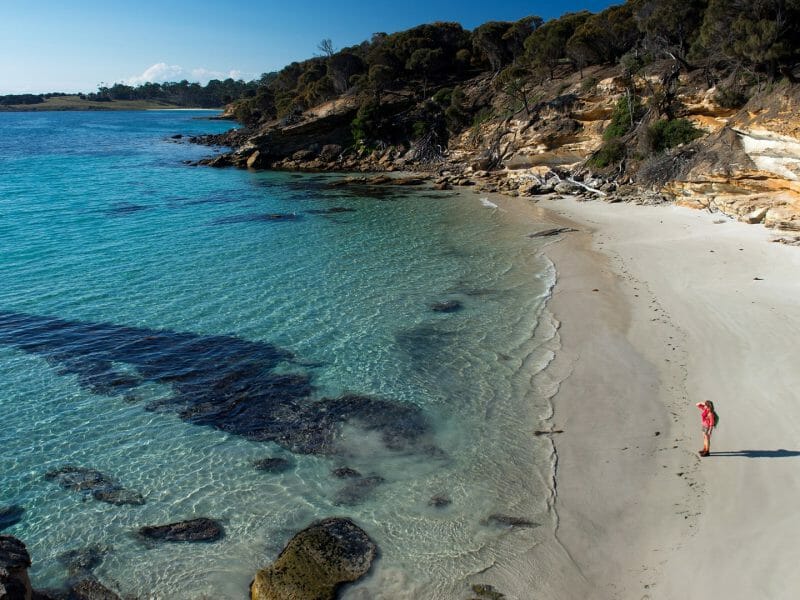
Travel by boat to the beautiful Maria Island. Devoid of any motor vehicles and with more chance of bumping into a kangaroo than another human, this island gem will be home for four days. During a gentle four day walk traverse pristine beaches, rugged cliffs and woodland before bedding down for the night in simple but comfortable forest camps. Indulge in delicious meals using fresh, local produce and fine Tasmanian wines, learn about the fascinating convict history of the island and spot some of the resident wildlife.
From potoroos to possums, penguins, dolphins and fur seals, plus bird life including sea eagles and the rare forty-spotted pardalote. Tasmanian devils can also be seen following their recent release on the island. All in all an unforgettable experience.
The Maria Island walk operates from October to April.

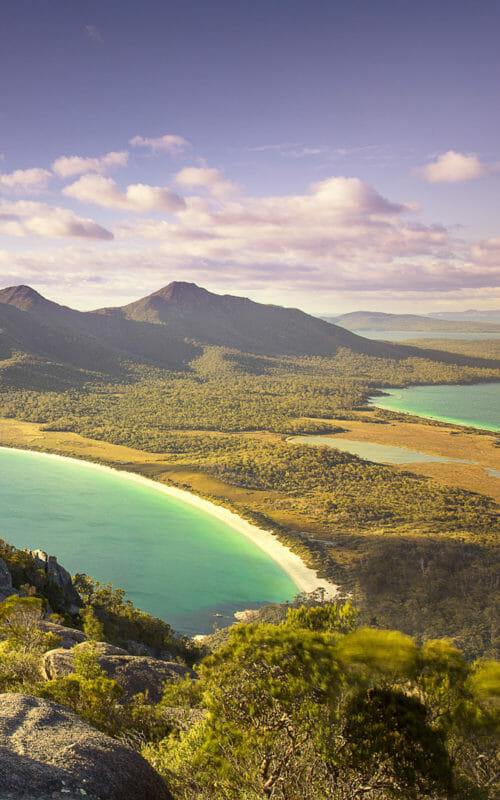
Freycinet Peninsula is a National Park and home to the internationally acclaimed Wineglass Bay. Spend two nights at the luxurious Saffire soaking up the stunning landscapes of granite mountains, sandy beaches and sapphire blue waters. Overlooking Great Oyster Bay, where migrating whales and dolphins can often be spotted, Saffire has access to wonderful fresh seafood and a range of lovely activities are on offer during a stay here. Kayak through wetlands amidst flocks of pelican, learn the art of beekeeping and don waders to harvest and shuck fresh oysters.
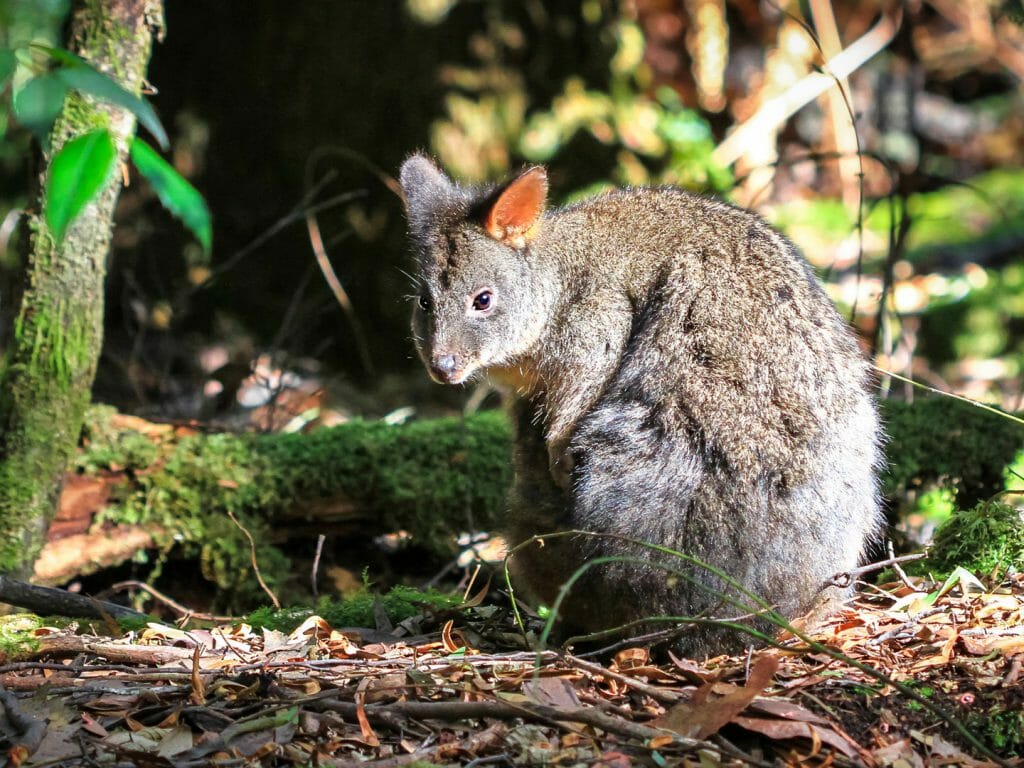
Tasmania is home to some unique and endangered mammals. Spend a day with our knowledgeable local guides in search of the Tasmanian ‘big five’ and the chance to learn more about the wildlife that is unique to this island state. Close encounters with Tasmanian Devils, wombats and kangaroos as well as a true bush tucker experience cooked by a true ‘bush chef’.

Tasmania’s capital city of Hobart is extremely pretty, with a vibrant port, thriving arts scene and a wonderful array of restaurants plus an atmospheric weekly market. Mount Wellington forms a spectacular backdrop and amidst the alpine wilderness of this 1,400 metre peak is one of Australia’s leading whisky distilleries. Learn about the craft of whisky distillation as well as the chance to taste some before cruising down the Derwent River to the sheltered waters around Bruny Island. Home to some of Tasmania’s finest seafood, gather oysters, mussels, abalone, crayfish and sea urchin from the waters before dropping anchor in a secluded bay to feast on your bounty.
Prices will vary depending on the time of year you are travelling. Prices do not include international flights. Please ask one of our Travel Experts for an accurate quote. Flights purchased through Steppes Travel departing from the UK are ATOL protected.
Tasmania has a temperate climate so there are generally no extremes of temperature. From October to December springtime begins, as do many of the walks, this is a very pretty time to visit. From January to March expect mild summer weather throughout the island and even into April and May as autumn arrives it can be a lovely time to visit with the leaves beginning to fall but the evenings are much cooler and the walks stop operating. June to September is cold and wet.
Our experts have created and curated these tailor-made holiday ideas to get you started. Take the time to search through them and find something that is the spark for your unique adventure.
Our knowledge, curiosity and expertise set us apart, driving us to create remarkable holidays and Beautiful Adventures tailored perfectly to you, carefully curated to help protect and conserve our planet.
Are you ready to Discover Extraordinary?